
Historical Lesbians
Yes, LGBTQIA+ folk have always existed

I’ve seen a lot of chat: people moaning about an upcoming lesbian storyline in Bridgerton. Look, I always thought Eloise was going to be the Bridgerton to be attracted to same-gender people. But a different character seems to be getting the spotlight. Fair play - authors can write what they feel is right.
Now, as for “the disgruntled” declaring lesbians didn’t exist yet, or it’s somehow unrealistic…
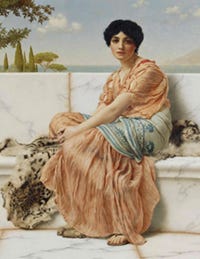
You do know that the word sapphic is given to us via the Ancient Greek poet, Sappho (Σαπφώ), right? She lived in 7th century BC!
Sapphic is more of an umbrella term these days btw, for WLW (women who love women), and includes lesbian, bisexual and queer identities. And has been used with that meaning since the 1890s (and possibly 1730s).
It is also from Sappho that we also get the word lesbian, for she lived on the island of Lesbos. And has been a term used to refer to WLW since about the same time as sapphic.
Before that, there doesn’t seem to be a direct term for lesbians, but that does not mean that they didn’t exist. We know they did. Sappho herself wrote erotic poems about women, for a start.
LGBTQIA+ folk have always existed!
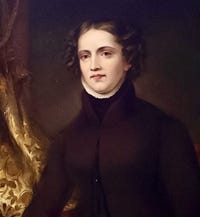
Anne Lister didn’t invent lesbianism! She is often cited as the first modern lesbian, though. Born in Halifax in 1791, she left coded diaries detailing her feelings for other women, and even a sort of marriage with one.
There is a marvellous TV series called Gentleman Jack about her. But that was a derogatory nickname incurred by her way of dressing like a man and conducting business. Also, she was a bit problematic, in that she seemed often to act from mercenary motivations. Disappointing!
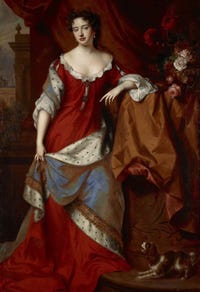
Queen Anne, who reigned 1702–1714, is known to have had “intense, intimate, emotional bonds with women.” They wrote passionate love letters to one another.
The film, The Favourite, is a rather fun exploration of her relationship with Sarah, Duchess of Marlborough. Things get fraught as Abigail Hill enters the scene. Starring the Oscar-winning Olivia Coleman. I mean, it’s not strictly historically accurate, or anything. But worth a watch.
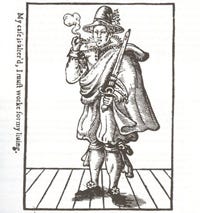
If we return to the 17th century, which is the era I’m currently researching, we find others. Mary Frith aka Cutpurse Moll, was a notorious pickpocket and fence in London. She often dressed in male clothing and smoked a pipe. Although, it was suggested she was bisexual in the play, The Roaring Girl (1611). She was apparently as cutting with her wit as she was with her sword. She apparently had a wicked sense of humour and enjoyed pranks.
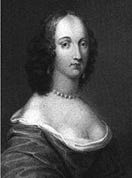
Katherine Philips (01 January 1631/2 – 22 June 1664), was an Anglo-Welsh royalist poet, translator, and woman of letters. She’s best known for her passionate poems on female romantic friendship, and her desire to put those relationships before marriage.
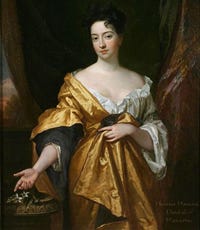
Hortense Mancini, Duchess of Mazarin (06 June 1646 – 02 July 1699), seems to have enjoyed her time in a convent, as well as with King Charles II. And then there was her famous relationship with Anne Lennard, Countess of Sussex, which ended up with the two women having a “friendly fencing match” in St James’ Park whilst dressed in their nightgowns! Lord Sussex dragged his wife off to the countryside after that, forever separating the pair. btw Lady Anne was the illegitimate daughter of King Charles II, via his mistress, Barbara Villiers.
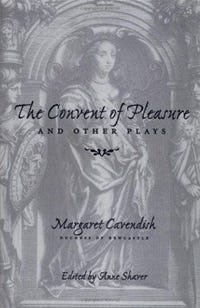
The Convent of Pleasure is a comedic play first published by Margaret Cavendish in 1668. It’s about Lady Happy who rejects marriage and establishes a women-only retreat. It hints at same-gender desire.
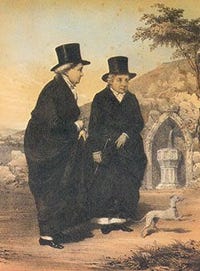
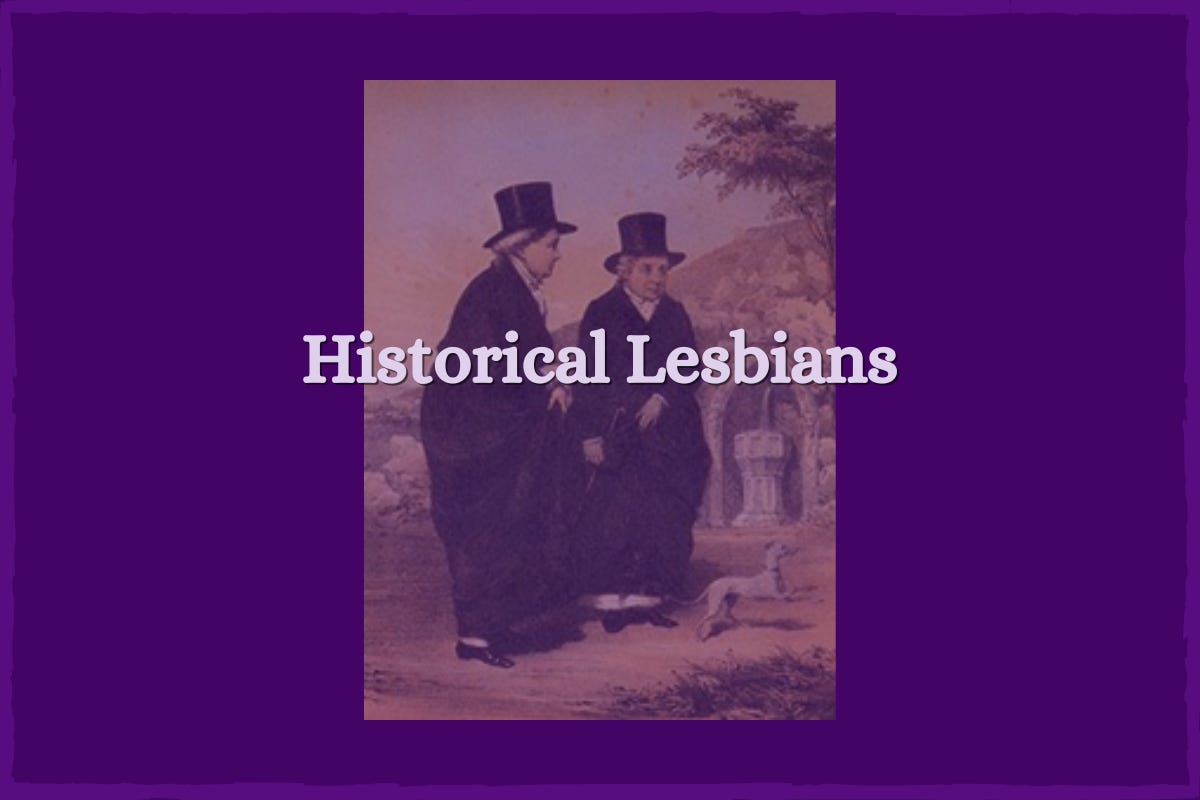
The "Ladies of Llangollen" - Eleanor Butler (1739–1829) and Sarah Ponsonby (1755–1831), were two upper-class Irish women who lived together as a couple. They met in 1768, and were both determined not to get married. In 1778, disguised as men, they attempted to flee Ireland. They were caught, but eventually their families agreed they could leave, and they settled in Llangollen in 1780, after having travelled together. They lived in Llangollen for 50 years, and rather cutely had a series of dogs named Sappho. Anna Seward wrote a poem about them, Llangollen Vale.
And that brings us back round to Anne Lister who visited the couple, and wrote to a friend stating she didn’t think their relationship was platonic (there was much speculation at the time).
But dogs named Sappho is a rather sweet note to end this article on. And I think that’s enough to hush the silly naysayers up.
We are all humans being. And love is always good.
Always in love and light,
TL
"We are all humans being." What an absolutely perfect sentence!