
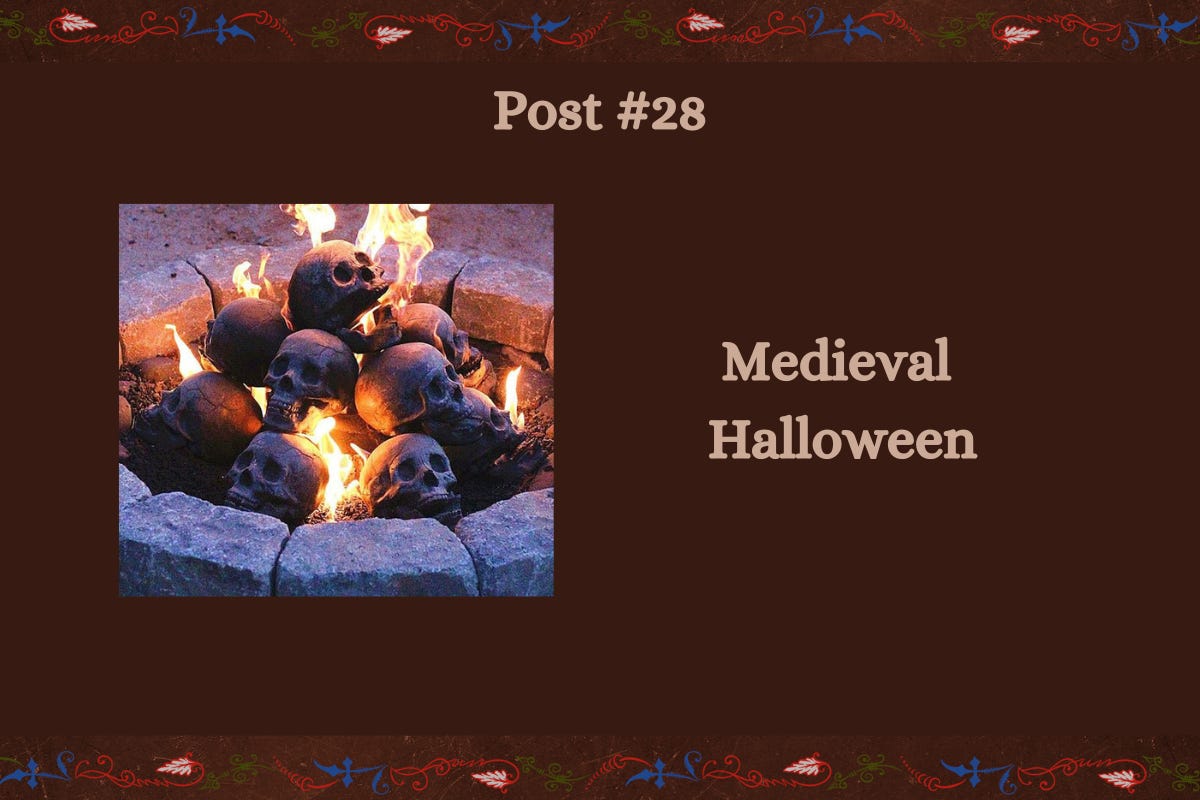
Medieval Halloween
How did they celebrate?

It’s that time of year! As we either get ready to celebrate or hide with the lights off, I thought it would be fun to look at how they celebrated Halloween back in the Middle Ages.
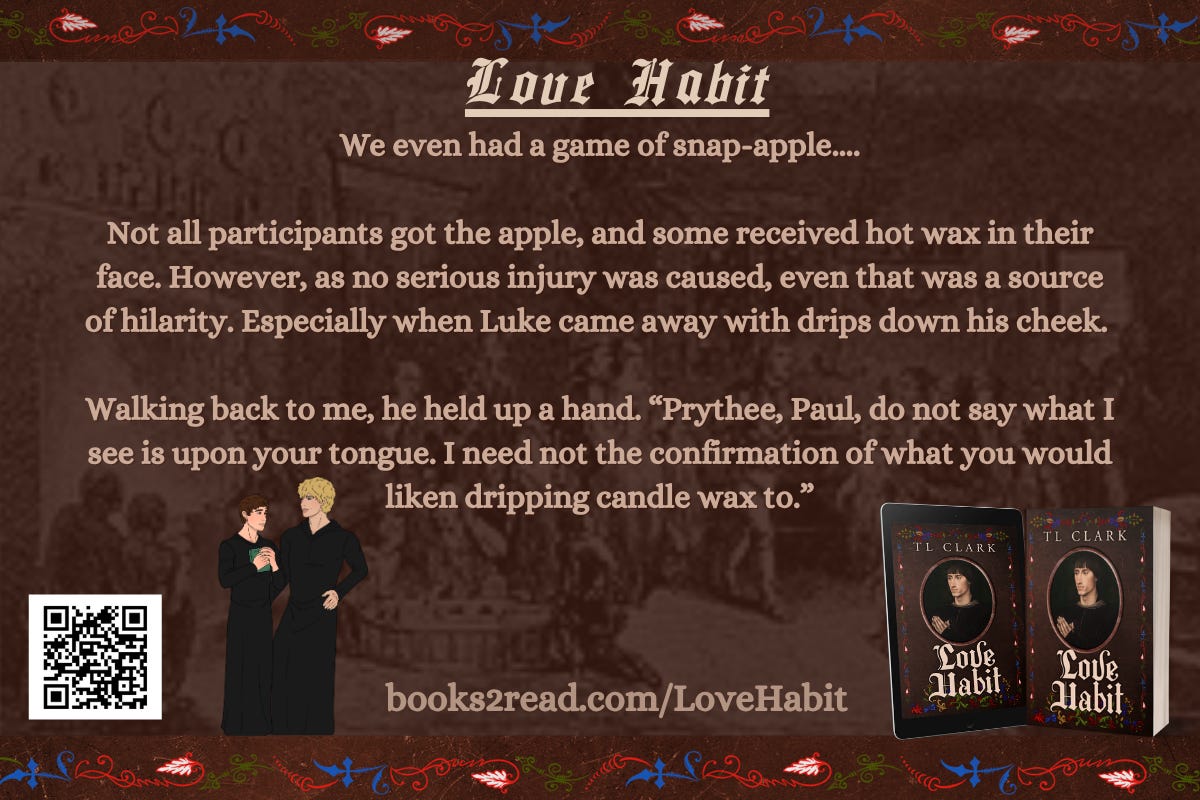
There is a whole chapter set at this time in my book, Love Habit. Wait. What? In a monastery? Aye, in a monastery.
So, firstly, we have All Saints’ Day - when, funnily enough, all the saints would be venerated. But also there was a Mass for the Martyrs.
This gets a bit confusing. So… the liturgical celebration begins on the night of 31st October (All Hallows’ Eve) but is actually marked on 1st November (All Saints Day).
The church may have been decorated with white lilies and/or red roses - innocence and bloodshed being symbolised because, y’know, martyrs.
However, it was not all solemnity. For, being a saints day, the monks could enjoy a feast of fine foods. My monks were particularly lucky as they lived in Kent - one of the cider-producing areas. Alternatively, mulled wine or wassail may have been imbibed.
Which leads me onto apples, generally. So, one could bob for apples in a bucket of water. BUT the more fun game of snap-apple was played too. Take a breath, for this is about to get dangerous!
Snap-apple was a health & safety nightmare of a game in medieval England! It involved tying an apple to one length of wood and a candle at the other. This would then be suspended from the ceiling. The candle would be lit! And the device spun. Competitors would then take turns trying to bite the apple whilst dodging hot wax whacking them in the face! :-O
Sometimes, I look back and think, “Wow, they really needed TV!?” LOL
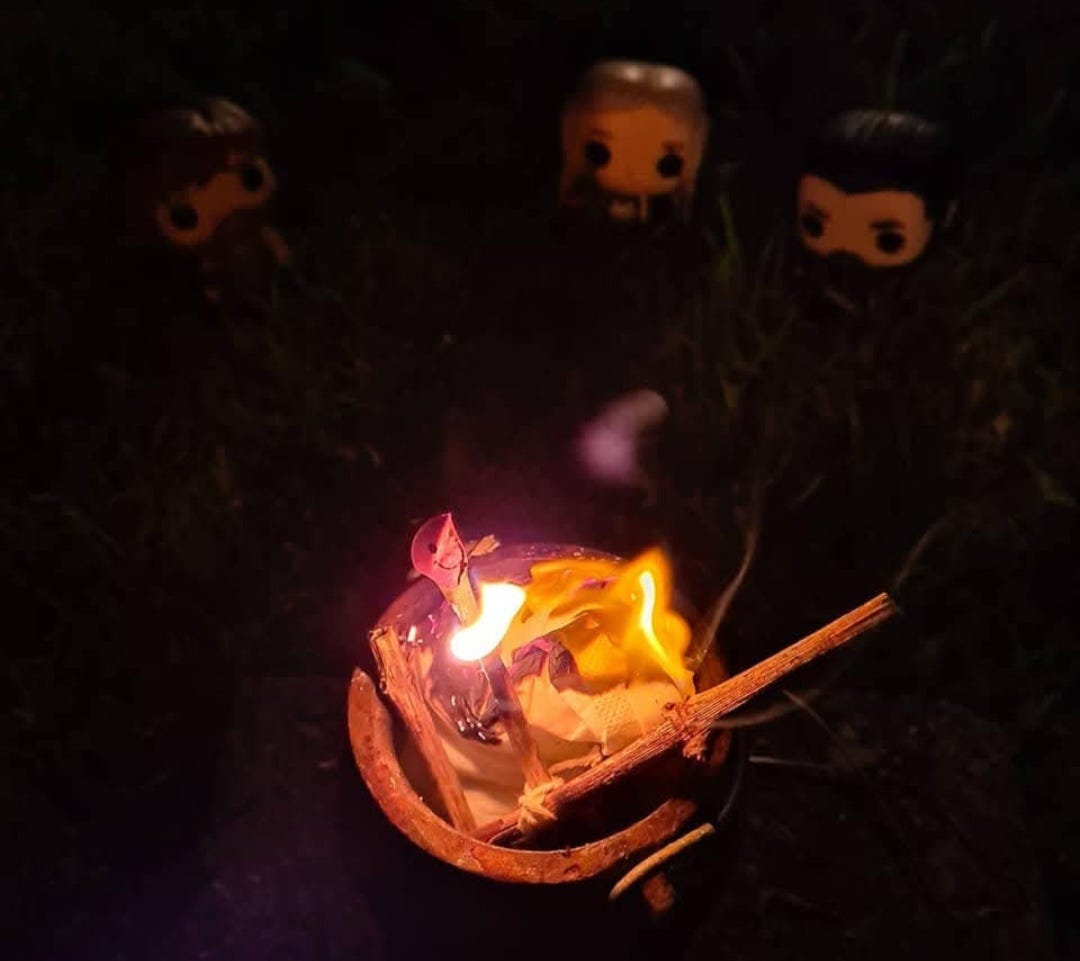
Now, a bonfire may seem rather pagan, and it probably was, let’s be honest - look up Samhain for the origin story. Incidentally it’s a contraction of ‘bone fire’, and in the Middle Ages, folk really would have included bones in it (hopefully, from the animals they’d eaten as opposed to being anything more sinister). Now, the prior in my book did utter some reverent words over this fire as a blessing.
In my other medieval novel, Love in the Roses, they were more extravagant. They held a big party including hired musicians. They did say prayers as well, though - they were good pious folk.
My Love in the Roses people also carved root vegetables which housed a lit candle (or possibly coal) to ward off evil spirits which may have been prevalent that night. No pumpkins, though! We didn’t have those yet. A carved turnip is far scarier looking anyway - seriously, look it up if you dare. Swedes or beets may also have been used.
A small plate of food may have been left outside the front door as an offering to the family’s ancestors.
Now, in manor houses, the hearth fires would be extinguished before the bonfire was lit. As that would attract all those bad spirits away from the house. With them safely distracted, one could pick up a burning branch of oak from the fire and head back to the house. Maybe stop in front of the front door to recite a quick prayer of something like, “May I never be found guilty of wrongdoing against any. May God preserve and protect this house from witches and goblins.” Then go inside to heroically light the hearth fire in the Great Hall with said burning branch. Your home is now safe, protected and warm, especially if one entreated the family’s special saints for assistance.
A feast could then be enjoyed with full gusto. Apples and nuts should feature, though. Eat, drink and be merry was definitely the ethos for the rest of the night.
You see, this was the end of the agricultural year. At Michaelmas (29th September), crops were sown and winter crops (wheat and rye) were ploughed. As the bread grains were sown, the previous summer’s crop had to be threshed and winnowed. The aim was to complete this by All Saints Day. The harvest reeve and some workers would expect to dine at the house as part of the celebrations. It was sort of the end of one year and the beginning of the next.
The next day, 2nd November was then All Souls Day aka All Hallows Day / Hallowmas. In the churches and monasteries, a special Mass would be held. This was when everyone truly prayed for the souls of those in purgatory. My monks held candles when they sung at that Mass.
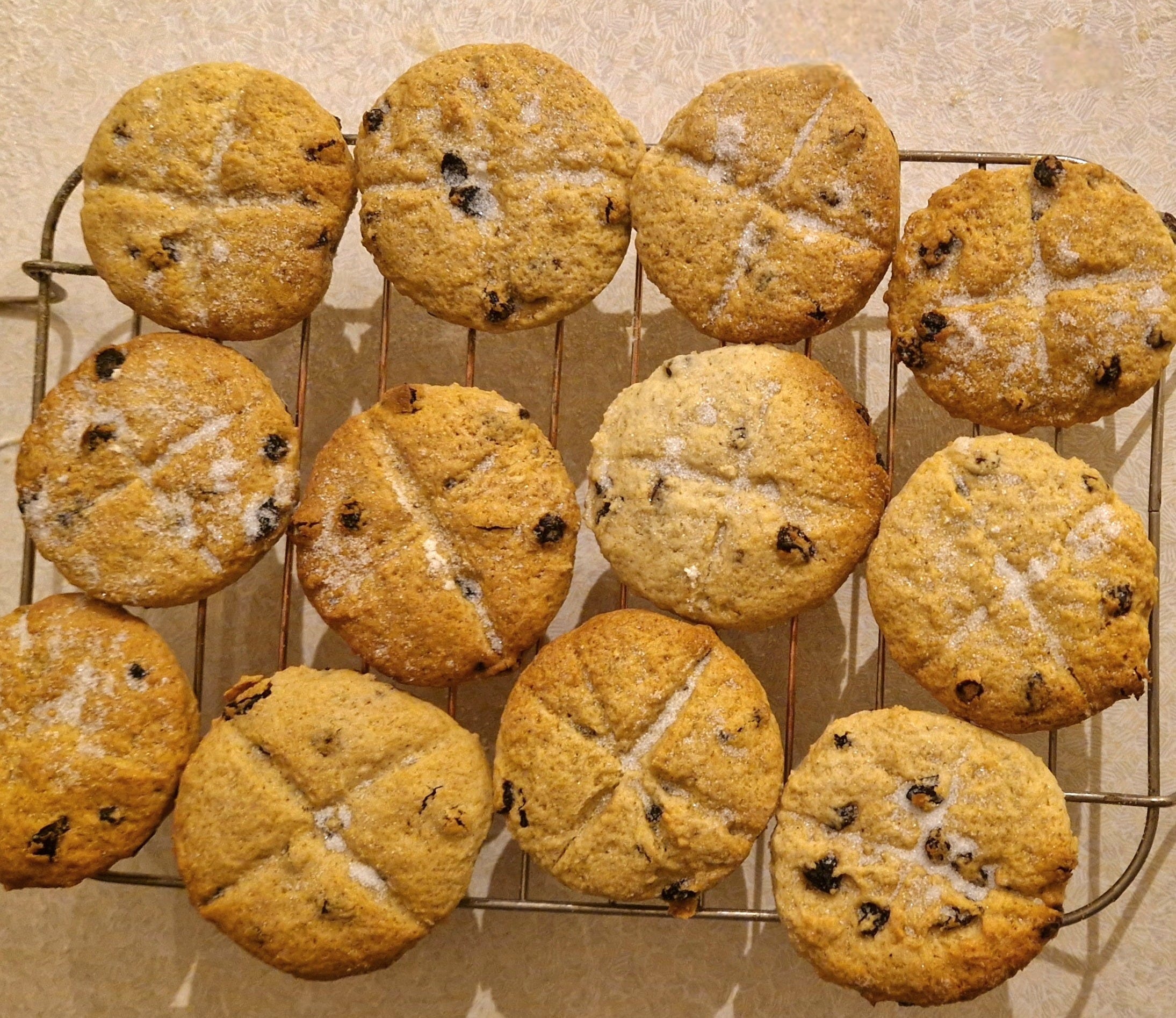
Soul cakes were made to hand out to folk who came to the door (usually underprivileged kids), in exchange for prayers for the dead. I’ve made these (see above pic), and they’re yummy - somewhere between a scone and a shortbread; spiced, rather flat, sweet treats. This was called souling.
The entire period from 31st October - 2nd November is Allhallowtide. And that’s where we get the contraction Halloween.
Always in love and light,
TL